

In the fast-paced flow of modern life, time is often the scarcest commodity. When long workdays collide with domestic responsibilities, the evening meal can easily turn from a source of nourishment into a source of stress. This time crunch frequently drives people toward ultra-processed convenience foods or expensive restaurant delivery options, both of which can compromise long-term metabolic health and financial well-being.
The solution to this daily dilemma does not require enrolling in culinary school or sacrificing the luxury of fresh, home-cooked food. Instead, it requires adopting a systemic, organized approach to the kitchen. By treating cooking as a logical workflow rather than a series of chaotic reactions, you can dramatically compress your time at the stove. Implementing smart, efficient strategies allows anyone to prepare nutrient-dense, high-quality meals in a fraction of the traditional time.
Mastering the Strategic Mise en Place Framework
The foundation of high-speed professional cooking relies on a classic French methodology known as mise en place, which translates to everything in its place. In a commercial kitchen, a line cook cannot afford to search for a clean pan or chop an onion while a protein is actively searing. Bringing this structural discipline into the home kitchen is the single most effective way to eliminate wasted time.
Before turning on a single burner or heating an oven, execute a complete mental and physical setup. This process involves a few specific actions:
-
The Complete Recipe Read-Through: Read your entire cooking plan from start to finish before touching an ingredient. This prevents the common bottleneck of discovering halfway through a dish that a component required an hour of marinating or needs to be at room temperature.
-
Spatial Tool Gathering: Collect every knife, cutting board, pan, measuring spoon, and oil dispenser you will need. Having these items within arm’s reach prevents fragmented trips across the kitchen during critical cooking windows.
-
Pre-Chopping and Grouping: Chop all vegetables and portion out liquids into small bowls before heating your pans. When ingredients are prepared ahead of time, you can focus entirely on thermal management and flavor development without panicking over burning food.
By front-loading the organization phase, you eliminate the cognitive fatigue and frantic multitasking that usually makes home cooking feel slow and overwhelming.
Shift from Full-Meal Prepping to Component Grouping
Traditional meal prepping often involves spending an entire Sunday afternoon cooking complete, identical meals and sealing them into plastic containers. While this method saves time, it often leads to culinary boredom by Wednesday and results in texturally degraded foods, such as soggy vegetables and dried-out proteins.
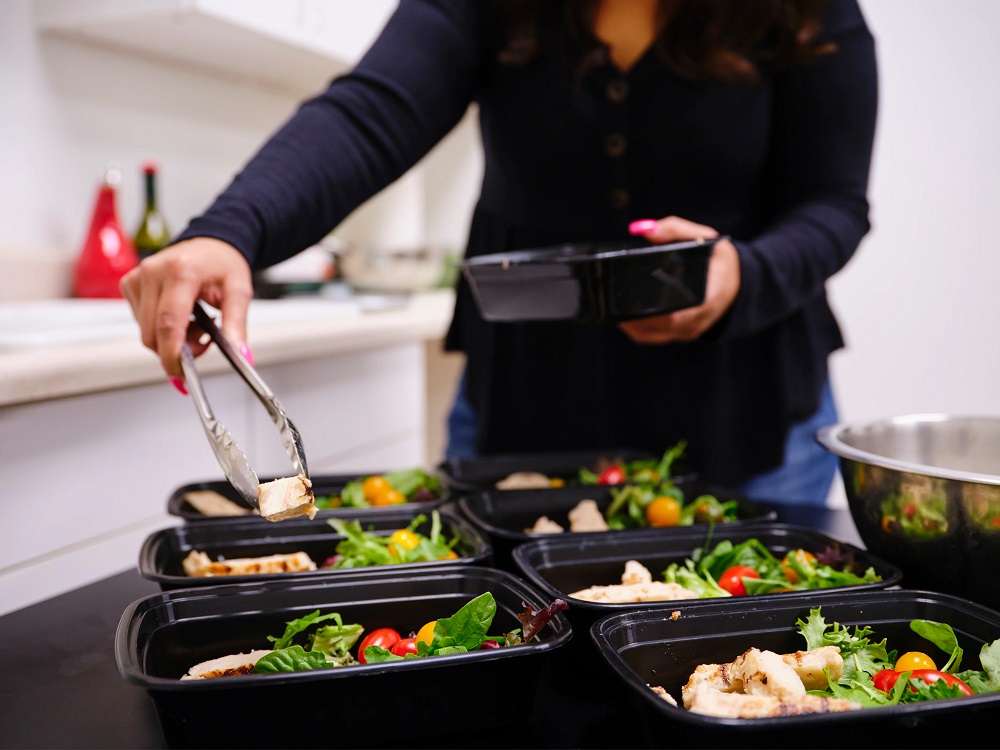
A highly efficient alternative is component prepping. Instead of constructing complete meals, dedicate a brief window to preparing versatile, foundational components that can be assembled dynamically throughout the week. This strategy maximizes freshness while minimizing active stove time on weeknights.
Focus on preparing three core categories of components:
-
Universal Grains and Starches: Cook a large batch of neutral grains like brown rice, quinoa, or farro, or roast a sheet pan of sweet potato wedges. These items store exceptionally well and can be quickly reheated or tossed cold into salads.
-
Cross-Functional Proteins: Bake, grill, or poach a large quantity of a versatile protein, such as chicken breasts, lean ground beef, or seasoned tofu. Keep the seasoning profile relatively neutral so these proteins can easily pivot into different cuisines, from taco bowls to stir-fries or Mediterranean wraps.
-
Flavor Catalysts and Sauces: Whisk together a few multi-purpose dressings, pestos, or marinades. A high-quality, homemade sauce can instantly unify disparate ingredients, transforming simple reheated components into an elegant, cohesive dish in under five minutes.
Maximizing Knife Skills and Station Efficiency
The physical mechanics of how you move around your cutting board dictate your overall speed in the kitchen. Many home cooks lose valuable minutes using dull knives, incorrect cutting techniques, or poorly arranged workspaces.
To accelerate your prep work, invest in maintaining a sharp chef’s knife. A dull blade requires excessive downward physical force, slips easily off slick vegetable skins, and tears the cellular walls of your food, which accelerates spoilage and causes uneven cooking. A sharp knife glides effortlessly through ingredients, drastically cutting down your manual prep time and ensuring uniform pieces that cook at the exact same rate.
Additionally, restructure your physical cutting station to minimize unnecessary motion. Place your heavy cutting board flat on the counter, securing it with a damp paper towel underneath to prevent sliding. Position your raw ingredients on the left side of the board, your clear cutting zone in the center, and a large bowl on the right side for finished pieces.
Most importantly, keep a dedicated garbage bowl directly on your workspace. Dropping vegetable peels, onion skins, and packaging scraps immediately into a nearby bowl eliminates dozens of disruptive trips back and forth to the main trash can, keeping your station clean and your workflow continuous.
Exploiting High-Efficiency Kitchen Technology
Modern kitchen appliances are engineered to manipulate heat and pressure far more efficiently than standard stovetops or conventional ovens. Strategically delegating tasks to these specialized tools can cut cooking times by half or more.
Electric pressure cookers, for example, use trapped steam to elevate boiling temperatures far past normal limits, allowing you to cook tough cuts of meat, dried beans, or rich bone broths in a fraction of the time normally required for a slow simmer.
Simultaneously, air fryers use high-powered fans to circulate dry, intense heat around food, mimicking the rapid thermal transfer of deep frying with minimal oil. Air fryers preheat almost instantly and cook vegetables, fish, and small proteins significantly faster than a large, conventional residential oven.
To maximize these tools, practice parallel processing. While your grain cooker operates automatically on the counter and your protein air-fries nearby, you only need to use the actual stovetop for a quick vegetable saute. Utilizing multiple automated heat sources allows you to finish an entire multi-component meal simultaneously without standing over a hot stove monitoring multiple pans.
Embracing the Clean-As-You-Go Discipline
The final bottleneck of meal preparation is often the looming pile of dirty dishes, mixing bowls, and food-stained counters that await you after dinner. This post-meal cleanup can create a psychological barrier that discourages people from cooking fresh meals the next day.
To eliminate this burden, treat cleaning as an integrated part of the cooking process rather than a separate, final step. Every recipe features natural windows of downtime, such as waiting for a pot of water to boil, letting meat sear undisturbed, or waiting for a dish to bake.
Instead of checking your phone or leaving the kitchen during these intervals, utilize these small blocks of time productively. Wash your prep bowls, wipe down the cutting board, put away spices, and load the dishwasher as you proceed. By the time your food is plated and ready to serve, the kitchen should be essentially clean, leaving you with nothing to handle after dinner except a single pan and your dinner plates.
Frequently Asked Questions
How can I safely thaw frozen proteins quickly if I forgot to pull them the night before?
The safest and fastest method to thaw frozen meat or fish without using a microwave is the cold-water submersion technique. Place the frozen protein inside a leak-proof, sealed plastic bag to prevent water logging and bacterial exposure. Submerge the bag completely in a large bowl filled with cold tap water, changing the water every fifteen minutes to maintain a cool temperature. Small cuts of chicken, shrimp, or steak will defrost completely within twenty to thirty minutes using this approach, bypassing the hours required for refrigerator thawing.
Why do my roasted vegetables often end up soggy instead of crispy, and how does that slow me down?
Soggy roasted vegetables occur due to crowding on the sheet pan, which causes the moisture evaporating from the food to become trapped underneath, steaming the vegetables rather than roasting them. This delays the caramelization process and forces you to extend the cooking time significantly. To speed up roasting and achieve a crisp texture, space your vegetables out completely on a large pan so the hot air can circulate freely. High thermal contact ensures rapid cooking and crisp edges within fifteen to twenty minutes at high temperatures.
What are the most shelf-stable ingredients to keep in stock for instant emergency meals?
To assemble rapid meals without grocery shopping, maintain a pantry stocked with canned legumes like chickpeas and black beans, high-quality jarred marinara sauces, canned tuna or salmon, canned coconut milk, and quick-cooking grains like couscous or rolled oats. Combining canned black beans with quick-cooking quinoa and a simple salsa yields a nutritionally complete, fiber-rich meal in under ten minutes using purely shelf-stable components.
Is it necessary to wash mushrooms before cooking, and does moisture affect prep speed?
Mushrooms act like sponges and absorb water rapidly if soaked or washed heavily under a running faucet. This excess moisture waterlogs the fungi, forcing you to spend extra time in the pan evaporating the water before any actual browning can occur. To maintain speed and preserve flavor, clean mushrooms by wiping away visible dirt with a dry or slightly damp paper towel. If they are exceptionally muddy, give them a very brief rinse immediately before cutting and pat them dry thoroughly with a clean towel.
How can I stop my eyes from watering while chopping onions to speed up my prep work?
The crying reflex triggered by onions is caused by a volatile chemical compound released when the vegetable’s cellular walls are crushed. To minimize this reaction and accelerate your chopping, ensure your chef’s knife is exceptionally sharp, as a clean slice crushes fewer cells than a dull blade. Additionally, chill the onion in the refrigerator or a bowl of ice water for fifteen minutes before slicing, as cold temperatures slow down the chemical reaction that converts the compounds into gas.
What is the fastest way to peel a large quantity of garlic cloves simultaneously?
To peel an entire head of garlic rapidly, separate the individual cloves from the main bulb and place them into a large, sturdy metal bowl. Invert a second metal bowl of identical size over the first to create a closed sphere. Shake the combined bowls vigorously for fifteen to twenty seconds. The intense friction of the garlic cloves crashing against each other and the metal surface will completely separate the paper skins from the cloves, leaving you with fully peeled garlic without manual effort.
Can I use store-bought pre-cut vegetables to save time, or do they lose too much nutritional value?
Purchasing pre-cut vegetables from the grocery store is an excellent, practical way to save time if manual prep work is keeping you from cooking at home. While pre-cut produce loses a negligible percentage of specific water-soluble vitamins like vitamin C due to increased surface area exposure to air, the remaining fiber, macronutrients, and minerals remain completely intact. The massive time savings and increased likelihood of eating fresh food far outweigh any minor nutritional degradation.