

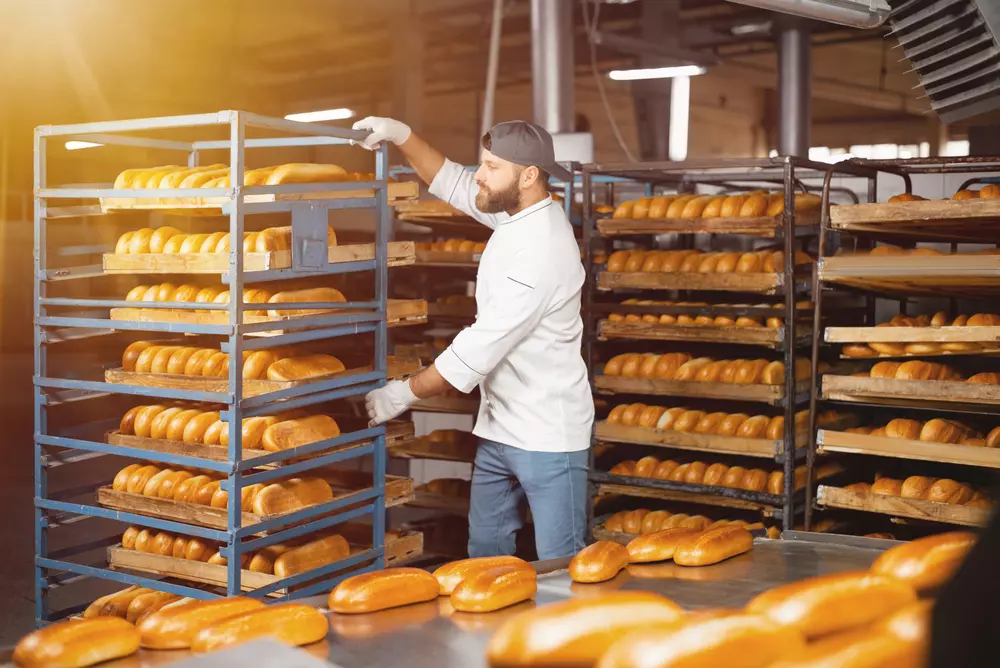
Opening a bakery is a rewarding venture that blends culinary artistry with precise science. Unlike general restaurant kitchens where chefs can frequently adjust seasoning, taste as they go, and cook by intuition, baking relies on exact chemical reactions. Flour, water, yeast, sugar, and fat must interact under strictly controlled environments to achieve the perfect rise, crumb structure, and golden crust. Because baking leaves very little room for error, the physical tools of the trade dictate the consistency and financial viability of the business.
Investing in commercial-grade equipment is the single most critical step toward ensuring operational efficiency and product quality. Domestic appliances simply cannot withstand the rigorous, high-volume demands of a daily baking schedule, nor can they provide the uniform heat distribution or mechanical power required for large batches. To establish a workflow that minimizes waste and maximizes throughput, a bakery must be anchored by a specific suite of heavy-duty machinery and foundational tools.
Commercial Mixing Solutions for Volume and Consistency
The baking process begins with the structural development of doughs and batters. In a commercial setting, hand-kneading or utilizing residential counter mixers is physically impossible and financially inefficient. High-capacity commercial mixers are essential for developing the gluten networks required for artisanal breads or achieving the delicate aeration needed for sponge cakes and pastries.
Commercial bakeries typically rely on two distinct classifications of mixers, each serving a highly specialized role in production:
-
Spiral Mixers: These machines feature a stationary spiral-shaped hook while the mixing bowl itself rotates. This unique mechanical design allows the mixer to handle dense, heavy bread doughs without overheating the mixture or overworking the gluten. Spiral mixers are the industry standard for artisan bread bakeries, bagel shops, and pizzerias because they keep dough temperatures low and handle massive batches with minimal mechanical strain.
-
Planetary Mixers: Operating similarly to residential mixers, these units feature a mixing attachment that rotates on an offset axis inside a stationary bowl. Planetary mixers are incredibly versatile because they accommodate interchangeable attachments, including dough hooks, wire whips, and flat beaters. This flexibility makes them ideal for general bakeries that produce a diverse menu of cookies, cakes, meringues, and laminated pastries.
Selecting the appropriate mixer size, typically measured in quarts, depends entirely on projected daily production volumes. Having a primary high-capacity mixer alongside a smaller utility mixer ensures that large dough batches and small accent frostings can be prepared simultaneously without causing production bottlenecks.
High-Performance Ovens as the Core Production Engine
If the mixer is the birthplace of the product, the commercial oven is where the magic is finalized. The choice of oven directly influences the crust texture, moisture retention, and overall visual appeal of baked goods. Standard residential ovens suffer from uneven heat distribution and lack the structural insulation required to maintain temperatures when the door is opened frequently.
Commercial bakeries generally select their primary baking engine from three main categories, depending on their core product offerings:
-
Deck Ovens: Highly favored by artisan bread bakers, deck ovens utilize heavy stone hearths that are heated directly. When dough is placed directly onto the hot stone, it experiences a rapid transfer of heat, resulting in a dramatic oven spring and a thick, beautifully blistered bottom crust. Many commercial deck ovens also feature built-in steam injection systems, which are vital for gelatinizing starches on the dough surface to create a glossy, crispy crust.
-
Convection Ovens: These ovens use internal fans to continuously circulate hot air throughout the baking chamber. This forced air circulation eliminates hot spots, resulting in highly uniform browning and rapid cooking times. Convection ovens are excellent for baking high volumes of cookies, pies, quick breads, and sheet cakes, as they ensure that every tray bakes at the exact same rate regardless of its position in the oven rack.
-
Rack Ovens: For massive wholesale operations, rack ovens offer the ultimate solution for volume. These large roll-in units allow an entire metal speed rack filled with dozens of sheet pans to be pushed directly into the baking chamber. The oven then lifts or rotates the entire rack during the baking cycle, ensuring uniform heat exposure for thousands of pastries or rolls simultaneously.
Precision Dough Prep and Shaping Equipment
The transition from a bulk mixed dough to uniform individual portions is a labor-intensive process. In the early stages of a business, bakers often portion and shape everything by hand using bench scrapers and digital scales. However, as demand scales, hand-shaping becomes a primary source of labor inefficiency and product inconsistency.
To streamline the makeup stage of production, successful bakeries integrate mechanical shaping tools. A dough divider-rounder is a critical piece of equipment that takes a large mass of dough and instantly cuts it into equal weight portions before rounding them into perfect spheres. This tool is indispensable for producing uniform dinner rolls, burger buns, and sub rolls.
For bakeries specializing in croissants, danishes, or puff pastry, a motorized dough sheeter is non-negotiable. Lamination requires alternating layers of dough and solid fat to be rolled out repeatedly to precise millimeter thicknesses. Attempting to roll laminated doughs by hand with a rolling pin is slow, physically exhausting, and risks warming the butter, which ruins the flakiness of the pastry. A commercial sheeter uses automated rollers to compress dough perfectly and evenly, preserving the integrity of the delicate layers within a fraction of the time.
Temperature-Controlled Proofing and Retarding Systems
Yeast is a living organism that reacts dynamically to ambient temperature and humidity. In an uncontrolled kitchen environment, dough will rise rapidly on hot, humid summer days and sluggishly during cold winter mornings. To maintain a strict baking schedule and guarantee that loaves look identical every morning, bakeries must control the fermentation environment.
A commercial proofing cabinet, or proofer, provides a warm, humid enclosure specifically calibrated to optimize yeast activity. By maintaining temperatures around eighty-five to ninety-five degrees Fahrenheit and humidity levels near eighty percent, proofers ensure that shaped loaves rise uniformly without drying out or forming an undesirable skin on the surface.
Complementing the proofer is the dough retarder, which is essentially a specialized commercial refrigerator designed to slow down fermentation. Retarding dough allows bakeries to utilize a process known as cold fermentation. Bakers can mix and shape bread dough during the afternoon, store it in the retarder overnight, and bake it first thing the next morning. This cold storage slows the yeast while allowing lactic acid bacteria to develop, resulting in a vastly superior flavor profile and giving the bakery staff a manageable production schedule.
Essential Refrigeration and Warehousing Solutions
While the focus of a bakery is inherently on heat and baking, cold storage is equally critical for food safety and inventory management. Bakeries handle massive quantities of perishable ingredients, including fresh dairy, eggs, liquid yeast, and bulk blocks of butter.
Walk-in coolers and freezers are standard necessities for high-volume bakeries. They allow for the bulk purchasing of ingredients, which drastically lowers food costs. Furthermore, having ample freezer space allows bakeries to utilize unbaked inventory storage strategies. For instance, cookie dough portions, pie shells, and laminated croissants can be pre-shaped, flash-frozen, and stored for weeks. This inventory buffer allows the morning bake team to simply pull frozen products directly from the freezer to the oven, ensuring fresh-baked availability throughout the day without requiring a midnight mixing shift.
On the retail side, refrigerated display cases are vital for showcasing delicate items such as mousse cakes, fruit tarts, eclairs, and cheesecakes. These cases must maintain strict humidity levels to prevent the pastries from drying out while remaining visually appealing to walking customers.
Frequently Asked Questions
What is the difference between a residential digital scale and a commercial portion control scale?
Residential digital scales are built for occasional use and often lack the speed, durability, and water resistance required in a production environment. Commercial portion control scales feature high-speed processing chips that lock onto weights instantly, saving valuable seconds during high-volume production lines. They are also constructed with heavy-duty stainless steel housings that can withstand fine flour dust, heavy moisture, and frequent sanitization without short-circuiting or losing calibration accuracy.
Why can I not just use a standard restaurant range oven for baking bread?
Standard restaurant range Ovens are designed primarily for roasting meats and heating pans, meaning they rely on uneven ambient heat and lack proper insulation. They do not possess the heavy stone decks necessary to transfer intense bottom heat directly to bread dough, nor do they have steam injection capabilities. Without steam, bread dough dries out too quickly in the oven, preventing a proper rise and resulting in a thick, leathery crust rather than a light, crispy, and glossy finish.
How does a proofer prevent a skin from forming on dough during the rising process?
A proofer prevents a skin from forming by strictly regulating humidity levels alongside temperature. When dough rises in a dry room, moisture evaporates rapidly from the exposed surface, creating a dry, inelastic layer of skin. This skin restricts the natural expansion of the dough as the yeast produces gas, leading to dense loaves or erratic tearing during baking. The high humidity inside a proofer keeps the outer surface of the dough moist and pliable, allowing it to expand fully and smoothly.
What size mixer bowl is recommended for a startup artisan bakery?
For a startup artisan bakery, a spiral mixer with a dough capacity of at least sixty to eighty quarts is generally recommended as the primary machine. This size allows the bakery to mix large batches of foundational bread dough, roughly forty to sixty loaves at a time, minimizing the labor spent mixing repetitive batches. For secondary tasks like whipping creams or mixing cookie batters, a separate twenty-quart planetary utility mixer is ideal to keep different production lines running smoothly.
Are wood-fired ovens still practical for modern commercial bakeries?
While wood-fired ovens offer historical charm and an excellent flavor profile for specific artisan breads, they are generally impractical as the sole oven for a modern commercial bakery. They require immense labor to fuel, clean, and maintain, and they take hours to reach and stabilize at baking temperatures. They also lack precise digital zoning controls, making it incredibly difficult to switch from high-heat bread production to low-heat delicate pastry production within a tight morning schedule.
Why do bakeries prefer stainless steel worktables over wooden butcher blocks?
Although wooden tables are historically associated with traditional baking, modern health codes and sanitation requirements heavily favor stainless steel worktables. Stainless steel is completely non-porous, meaning it cannot absorb moisture, fats, oils, or food particles that harbor dangerous bacterial growth. It is exceptionally easy to scrape down, sanitize, and wash after dealing with sticky doughs or greasy butter. Wooden surfaces scratch easily and can warp or trap allergens over time if not meticulously maintained with specialized food-safe oils.
Can a dough sheeter be used for all types of dough, or just laminated pastries?
A commercial dough sheeter is incredibly versatile and can be used for a wide variety of non-laminated doughs that require uniform thickness. Beyond croissants and puff pastry, sheeters are frequently used to roll out consistent sheets of pie crusts, fondant for cake decorating, pizza dough bases, flour tortillas, and even cookie doughs. Utilizing a sheeter eliminates human error and guarantees that every single batch of rolled product has the exact same thickness and baking characteristics.